Posts tagged with "Uncategorised"

Detecting HTML5 Goodness

Sometimes you stumble upon things on the web that are quite breathtaking in their simple cleverness and sheer elegance. I discovered one such resource today while reading the current draft of what may well become a seminal text on the emerging HTML5 standard. Chapter 2 of Mark Pilgrim’s Dive into HTML5 is all about supporting the transition as browsers start to support the new HTML5 elements canvas, video, local storage, web workers, offline web pages, geolocation, input types, placeholder text, form auto focus and microdata. This can be done by using JavaScript to interrogate new properties and functions that these new features will add to the DOM if they are supported by the browser, and this is the subject of this chapter. The beauty of it though is that, because this is a web page, written in HTML5, these very same tests can be and are be performed on any user’s browser that visits this page as shown in the illustration.
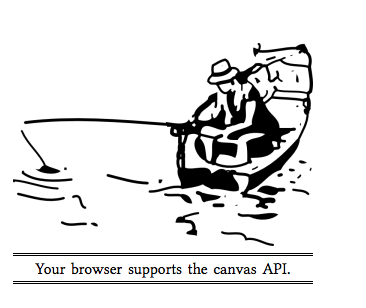
I spotted this feature while browsing the site with my iPhone, and then I thought I’d check it out with my other browsers. It works, and it is so elegant! I’ve summarized my findings in a table here, and the real beauty of this is that as each new generation of browser is released, I can simply go back to Chapter 2 and see at a glance what’s changed!

This and other HTML5 goodness recently discovered on the web can be found in my delicious bookmarks collection.
Virtual Revolution

A new BBC/Open University documentary series on the World Wide Web started last Friday on BBC 2. It is called “The Virtual Revolution” and is hosted by Guardian Technology journalist Dr Aleks Krotoski.

It is interesting not so much for its technical depth (which quite frankly is quite shallow) but for its introduction to the social/political/commercial issues surrounding the Internet and the World Wide Web. Plus it has interviews with many of the pioneers and entrepreneurs who were involved in its development.

The series is available to watch again on the BBC iPlayer and there is a supporting web site (http://www.bbc.co.uk/virtualrevolution/) that has lots of further information.

I am urging all my ICCT students to watch it!

reBlog from Nick Sharratt: DrBadgr

I found this fascinating quote today. Regarding TurnitIn:

Recycling and repurposing of text online is becoming so ubquituous that the noise is casuing a problem in the interpretation of originality reports. They used to save us time in investigating cases of plagiarism, now I’m not so sure.Nick Sharratt, DrBadgr, Nov 2009

As we are about to use TurnitIn for dissertation theses, this arrives as a timely warning!

I'm fed up!

Yesterday I installed Windows 7 on a virtual machine on a MacBook Pro with no problems (see previous post). Today I’m attempting to do the same thing on my office desktop. Yesterday I ran the compatibility checker and no real problems were found. Today, at around 10.00 am, I stated the upgrade from Vista Business to Windows 7 Professional and it’s still not finished. First I had to remove Zone Alarm. Then the installer insisted that I remove the control panel for my Graphics card and iTunes (the latter caused the CD to disappear!) I also had to take my machine through both Vista SP1 and SP2 (and a couple of intermediate system updates in between) before the installer would even start the long-g-g-g-g process of “gathering system information” which happens even before the installation proper starts. At that point (Around 4.00 pm) I left it to it and have come over to indulge in a large latte in the Library.

I know it’s my own fault. Everyone says “do a clean install”. But who can afford the effort of backing up data, installing the O/S and then reinstalling all those applications and restoring the system settings!

I'm a PC!

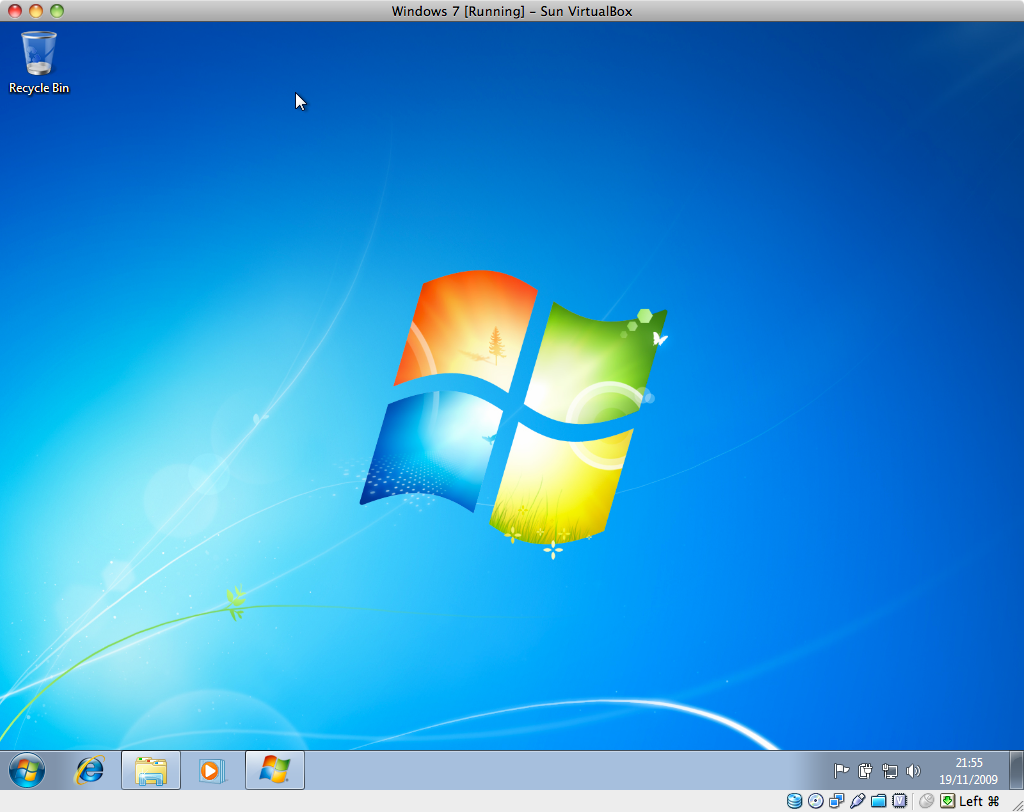
This is a screen-grab from my new MacBook Pro and it’s running Windows 7 in a OS/X window. It’s not magic, it’s the free open-source VirtualBox virtualizer from Sun Microsystems. At less than half the price of Parallels!

It works. It took no time to set up. And it means that I can continue to run some of the essential windows-only software (such as Camtasia Studio), Windows Live Writer, etc, during my transition from PC pragmatist to Mac Zealot.

If the upgrade of my 2-year-old Dell office desktop to Windows 7 from Vista is anywhere near as smooth, I’ll be very surprised! For more on running Windows 7 on VirtualBox on the Mac, these “Fat Bloke’s Shorts” videos from VirtualBox TV are a great introduction.

Comment Spam Attacks

Over the last couple of weeks I’ve started getting comment spam attacks on this blog via my comments stream. There’ll be comment like “I visited your blog and I’ve saved to read later” from a (presumably) bogus user. But the comment will include a number of links to dubious services. I use Disqus for my comment handling and I’ve had to gradually turn up the moderation settings so that now all comments have to be moderated. I’m sorry about this, but perhaps the bad guys will eventually go away!

I’ve noticed a few sites that I visit have also been link-spammed in a similar way, and Captcha technology doesn’t stop them. Presumably there are unscrupulous people who pay human beings to go to blogging sites and add link spam messages: sort of like the gold farming that is done in China for World of War Craft players who can’t actually be bothered to play the game!

Internet at 40

I’ve just spent the afternoon with the wonderful celebration piece A people’s history of the internet: from Arpanet in 1969 to today that was published last Friday on the Guardian Technology website. What’s amazing to me is how recent it all really is! I started at Swansea University in 1985 and electronic communications was a difficult issue then. I remember the protocol wars of 1986 when JANET wanted to use X25 when the US was about to standardise on TCP/IP (I recall the our LIS wanted to toe the party line, but that Computer Science wanted to go the Internet route); I remember trawling Gopher for software to download using FTP and putting together tar files from shell archives of multiple USENET messages. I vaguely remember the public announcement of the World-Wide Web (1991), the emergence of the Mosaic browser on X-windows and the Mac, the arrival of the World-Wide Information Service at Swansea (created by our Own David Gill) and the first web site that I created for the Department of Electrical and Electronic Engineering at the University (sadly not now to be found on the Way back machine). I also remember the University subcommittee that tried to standardize the University’s web sites and my complex, template driven system for creating my Department’s web pages (circa 1999) according to University Guidelines before there was a Content Management System.

But what’s really amazing, when you look at the time-line, is that the stuff that’s really important now, YouTube, twitter, Facebook, podcasting, RSS feeds, are all less than 10 years old. Even Blogger (1997) and Wikipedia (2001) are recent events. It makes me wonder what’s to come, and how will I continue to keep pace with it all!

It reminds me of the punchline to the Monty Python four Yorkshiremen sketch “And you try and tell the young people of today that ….. they won’t believe you.”

Aye, tha’s reet aboot that lad!